
31 August 2026
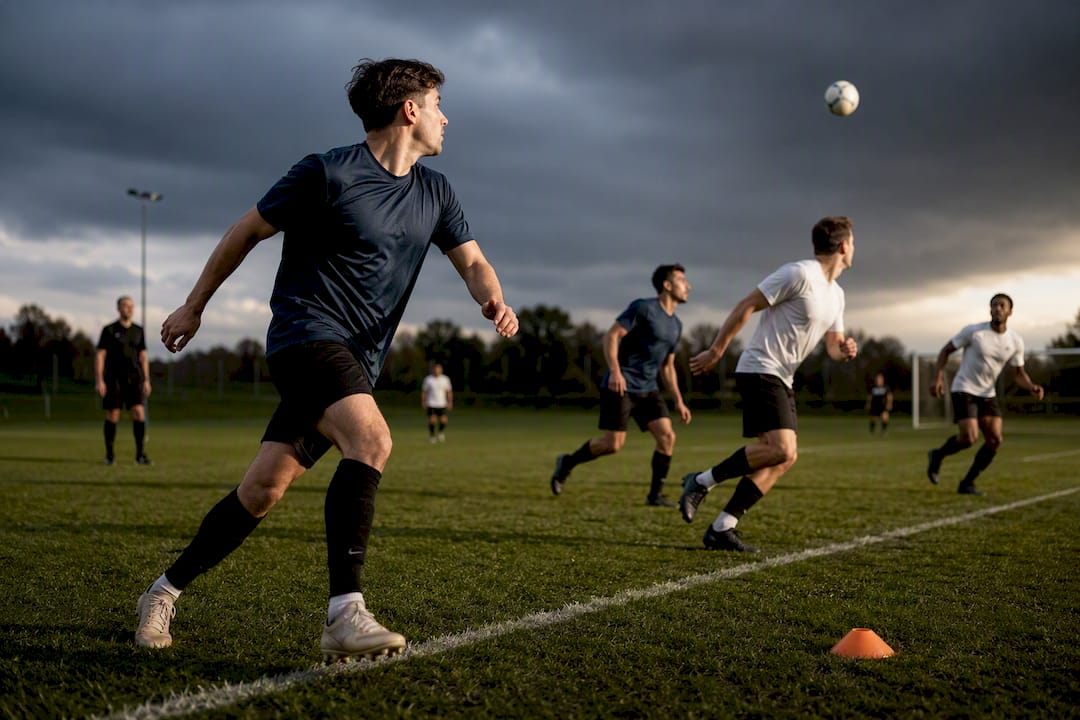
Train Eyelines to Read Judges: Spot the Ball Strategy for UK Players
To improve your chances, place spots the way judges do, not where instinct says the ball once sat. That means watching filmed judging sessions, drawing eyelines with a ruler, and testing more than one coordinate when the tiebreaker rules allow it. Everything below breaks down how to do each of those things properly.
TL;DR:
- Rely on drawing eyelines from actively looking players to identify convergence points near the judges’ consensus rather than instinctive guesses.
- Use a straightedge to intersect multiple eyeline lines, and zoom in to improve precision when matching the actual judged coordinate.
- Watch filmed judging sessions to understand panel decision-making, focusing on disagreements and the language judges use for cues.
- Track your placement accuracy over time by logging differences and biases to identify and correct consistent errors or tendencies.
- Verify that the contest operator is licensed and transparent, and set strict budgets to avoid gambling harm even when skill levels improve.
Table of Contents
- How spot the ball competitions actually work
- What visual cues do judges actually rely on?
- Which practical tactics improve your placements?
- How do you learn from published judging videos?
- How should you track and measure your results?
- Is the operator you’re playing with actually legitimate?
- A week of testing eyeline technique in practice
- Where a raffle tracker fits alongside better spotting
- Sources
How spot the ball competitions actually work
Every entry starts the same way: you submit an (x, y) coordinate on a photograph with the ball removed. What decides the winner, though, is not where the ball genuinely was. It is where a panel of judges, working independently of the original photo, decides it most likely was. BOTB explains that its panel includes referees and ex-players, and the judging process is filmed for transparency.
That distinction matters for legal reasons as much as sporting ones. UK prize competition law requires a genuine test of skill, so operators define the “correct” answer as the judges’ considered assessment rather than a fixed historical fact nobody can verify. A few signals tell you an operator takes that seriously:
- Judging sessions are filmed and, in some cases, published for entrants to watch back.
- An independent witness, sometimes a solicitor, oversees the panel to confirm the process was followed.
- Tiebreaker rules and coordinate grids are published clearly before you enter, not buried in terms nobody reads.
Operators that skip these steps are worth treating with caution. Our comparison of UK prize competition operators covers which ones are transparent about their judging process and which leave players guessing.
What visual cues do judges actually rely on?
Judges are not staring at a blank patch of turf hoping for inspiration. They are reading the same photograph you are, just with more practice at extracting the right signals from it. Spotandwin highlights eyelines and body language as the two most reliable indicators, and officiating research backs that up from a different angle entirely.
- Eyelines first. Draw a straight line from each nearby player’s eyes toward the pitch. Where several lines converge is usually close to the judges’ final answer, because players naturally track a moving ball with their gaze.
- Body language second. A defender’s raised arm, a goalkeeper’s crouch, or a midfielder mid-stride toward one side of the frame all hint at where attention, and therefore the ball, was pointed.
- Environmental cues third. Shadows can suggest the time of day and light angle, which affects how far a ball’s shadow falls from its actual position. Turf markings, motion blur on boots, and one player’s leg occluding another’s can all narrow the field.
Judges rarely land on a single “perfect” spot. Referee in football officiating notes that officials accept small inevitable errors and rely on consistent principles rather than pixel-perfect certainty. Spot the ball panels work the same way: when eyelines and body language disagree slightly, judges often average the competing signals or nudge the spot toward the most heavily weighted cue, usually the tightest cluster of eyelines.
Pro Tip: Weight eyelines from players who are actively looking at the ball, not ones glancing at a teammate or the crowd. A distracted player’s gaze is close to useless as a cue.
Which practical tactics improve your placements?
Reading cues is only half the job. Turning that reading into a precise coordinate takes a few simple tools and a bit of repetition.
- Use a ruler or straightedge. Print the image or work from a tablet, and physically draw lines from each player’s eyes. Where three or more lines cross is your strongest candidate zone.
- Zoom in before you commit. Enlarging the image reveals occluded limbs and shadow direction that get lost at thumbnail size. Tips from Spotandwin.co.uk recommend zooming specifically to sharpen eyeline intersections.
- Play multiple spots when the format allows it. Many competitions let you submit several coordinates for extra entries. Cluster one spot at your highest confidence intersection, then place others slightly off it to cover the judges’ likely margin of adjustment.
- Practise on archived results. Most operators publish previous winning coordinates and photographs. Treat them as a training set: guess first, then compare against the published answer.
A simple ten-image drill works well. Pick ten archived contests, spot each one using eyelines and body language only, then check your result against the published coordinate. Log the pixel distance you were off by, and repeat weekly. Most players see their average error shrink noticeably within a few weeks, purely from training their eye to prioritise the right cues.
Pro Tip: Keep your first guess unmarked before you draw a single eyeline. Comparing your instinctive spot against your reasoned one tells you a lot about which cues you’re naturally underusing.
How do you learn from published judging videos?
Filmed judging sessions are the single best training resource available, because they expose the reasoning behind a decision, not just the final coordinate. Watching a panel argue over an eyeline or debate a shadow’s angle teaches you more than a dozen static images ever will.
- Pause at every disagreement. The moment two judges point to different spots is the moment you learn which cue carries more weight in practice.
- Note the exact language used. Phrases like “his eyes are on it” or “look at the far post line” reveal recurring heuristics, particularly which players’ eyelines judges trust most.
- Timestamp useful examples. Build a personal shortlist of clips where the reasoning was especially clear, so you can revisit them before entering a new contest.
- Track trends across weeks. If a panel repeatedly favours the goalkeeper’s eyeline over an outfield player’s, that is a bias worth carrying into your next placement.
Judges sometimes shift a final position slightly to reflect panel consensus or correct for perspective distortion in the photograph, a pattern that Spotandwin.co.uk’s coverage of judging behaviour points to directly. Spotting that tendency over several contests, rather than treating each one in isolation, is where consistent improvement actually comes from.
How should you track and measure your results?
Improvement without measurement is just optimism. A basic log turns vague progress into a number you can actually watch move.
After every judged result, record:
- Your submitted coordinate and the published judged coordinate.
- The pixel or grid distance between them.
- A screenshot of the image with your eyelines still drawn on it.
- A short note on which cue misled you, if any.
A simple spreadsheet with columns for date, your x/y, judge x/y, distance, and directional bias (were you consistently too far left, too high, and so on) will show a pattern within a handful of entries. Most players discover a directional bias they didn’t know they had, often drifting toward the centre of the frame rather than trusting an off-centre eyeline cluster.
Where a contest ranks entries by closeness and offers a second tiebreaker coordinate, use it deliberately: place your second-closest guess to cover the opposite side of your primary bias, not right next to your first spot.
Is the operator you’re playing with actually legitimate?
Skill and technique only pay off if the operator running the contest is genuinely regulated and transparent. Before entering, check the organiser against the Gambling Commission’s public register, which lists licensed operators and their business details.
Beyond the licence check, a few habits keep play sensible:
- Set a fixed monthly budget for entries and stick to it, regardless of how confident you feel about a spot.
- Use self-exclusion tools if you notice spending creeping up, and treat them as a normal safety feature, not a last resort.
- GambleAware and Samaritans both offer free, confidential support if gambling starts to feel like a problem rather than a hobby.
- Favour operators that film judging and involve an independent witness. Both signals suggest the process will hold up to scrutiny, including yours.
Our guide on checking whether a UK raffle site is legit walks through the same checks in more detail if you want a fuller checklist.
A week of testing eyeline technique in practice
One useful test: pick a single archived judging video, watch it twice, and log where your spot diverged from the panel’s reasoning. Adjust your eyeline weighting slightly, then try two live entries the following week. Early gains tend to be small, a slightly tighter cluster, a better tiebreak position, but they compound.
— matt
Where a raffle tracker fits alongside better spotting
Sharper spotting only pays off if you’re entering competitions worth your time in the first place; learning solid betting techniques can make all the difference, as explained in Betting education resources. That’s the gap Rafflegenius closes: instead of hunting across dozens of operator sites for decent odds, you get live odds, ticket prices, and closing times pulled into one place, refreshed every 10 minutes rather than left stale for days.

Improved judging technique and better-value entries work together, not separately. A well-placed spot on an oversubscribed contest still faces long odds against hundreds of other sharp guesses, while an undersold competition with the same prize pool gives your improved accuracy more room to actually pay off. Rafflegenius surfaces those undersold competitions directly, so you can apply everything covered above to contests where the numbers are genuinely in your favour. Start by browsing the live competition tracker and see which spot the ball contests currently offer the best odds relative to entries received.
Sources
- Gambling Commission - public and players
- How To Win Spot The Ball Competitions | BOTB
- Spotandwin
- Referee
Recommended
18+ · Please gamble responsibly. Raffle Genius is a comparison service and does not run competitions.
Best odds, straight to your inbox
One email a week with the undersold UK competitions closing soon. No spam, unsubscribe any time. 18+