
13 September 2026

Spot Undersold High Value UK Competitions With Live Odds in 10 Minutes
The quickest way to find worthwhile high-value competitions in the UK is to focus on curated competition directories and operator “live draws” pages, then judge each entry by one measure only: implied odds, meaning tickets sold against tickets available. Free postal-entry routes and Gambling Commission guidance confirm a draw’s legitimacy, while a live-odds tracker can flag undersold competitions that carry strong value.
TL;DR:
- Focus on competitions with low percentage tickets sold, as these undersold draws offer better implied odds and higher expected value.
- Always verify the existence of a genuine free-entry route and check past results before investing in a draw.
- Use live odds trackers that refresh every ten minutes to identify current undersold competitions and avoid stale data.
- Comparing implied odds based on tickets sold versus total tickets helps accurately assess a draw’s value, regardless of prize size.
- Prioritize trusted operators with transparent terms and verified past draws to reduce the risk of scams or illegitimate competitions.
Table of Contents
- Where to find current high-value competitions in the UK
- What to check before you enter (odds, price, free entry, T&Cs)
- How to compare value: simple maths for odds, ticket cost and cash alternatives
- Legal and safety basics: what UK regulation and safer-play guidance require
- A quick action checklist: how to pick the best high-value competitions today
- Prize types typically offered: cars, cash, homes, watches and holidays
- Risks and common scams associated with high-value competitions in the UK
- Strategies to maximise your chances and choose the right competitions
- What actually matters when choosing a competition to enter
- How Raffle Genius helps you spot undersold high-value competitions
- Primary sources and regulator pages readers should bookmark
- Sources
- FAQ
Where to find current high-value competitions in the UK
Undersold draws don’t stay hidden if you know where to look. Curated directories are the fastest starting point because they let you filter by prize type, closing date, or popularity, rather than trawling dozens of individual operator sites one by one.
An operator’s own “live draws” page is still the source of truth, though. That’s where tickets sold, tickets remaining, and closing times update in real time, and it’s worth checking directly before you commit any money, since third-party listings can lag behind by hours.
Social channels and newsletters matter more than most players assume. Instant-win drops and limited-ticket events often sell out within minutes of being announced, and an operator’s Twitter or Instagram feed is frequently the only place that news breaks first.
A few habits make the difference between catching genuine value and missing it:
- Filter directories by “closing soon” or “percentage sold” to surface draws nearing their deadline with tickets still unsold.
- Compare the percentage sold figure across two or three competitions before choosing where to spend.
- Subscribe to operator newsletters or RSS feeds for early notice of new draws.
- Bookmark a shortlist of trusted operators rather than searching from scratch each time.
- Set a personal watchlist so you’re alerted before a favourable draw closes.
Combining a directory’s overview with an operator’s live page gives a fuller picture than either source alone. A tool like Raffle Genius does this comparison automatically, refreshing odds across tracked operators every ten minutes.
What to check before you enter (odds, price, free entry, T&Cs)
Every high-value competition worth entering will survive a short checklist. Skipping it is how players end up paying for tickets in draws that offer poor value or, worse, questionable legitimacy.
- Check the ticket price alongside any per-person ticket cap and the total number of tickets available for the draw.
- Work out the odds: tickets sold divided by total tickets gives you the implied chance any single ticket has of winning.
- Confirm a free postal-entry route exists, since UK rules require one for most prize competitions, and follow its instructions exactly.
- Read the terms for a cash alternative, the stated draw method, how winners are announced, and who covers delivery of physical prizes.
- Watch for red flags: no published results archive, a vague or unexplained draw method, missing contact details, or promises that sound too good to be true.
Legitimate operators tend to make these details easy to find rather than burying them in lengthy terms pages. If the free-entry route is hard to locate, or the draw method reads as deliberately vague, that’s usually a sign to look elsewhere. Guidance on free draws and prize competitions from the Gambling Commission sets out exactly what a lawful free-entry route should look like.
Pro Tip: Screenshot the terms and conditions page when you enter a competition with a large prize. Operators occasionally update pages before a draw closes, and having your own record protects you if a dispute ever arises.
How to compare value: simple maths for odds, ticket cost and cash alternatives
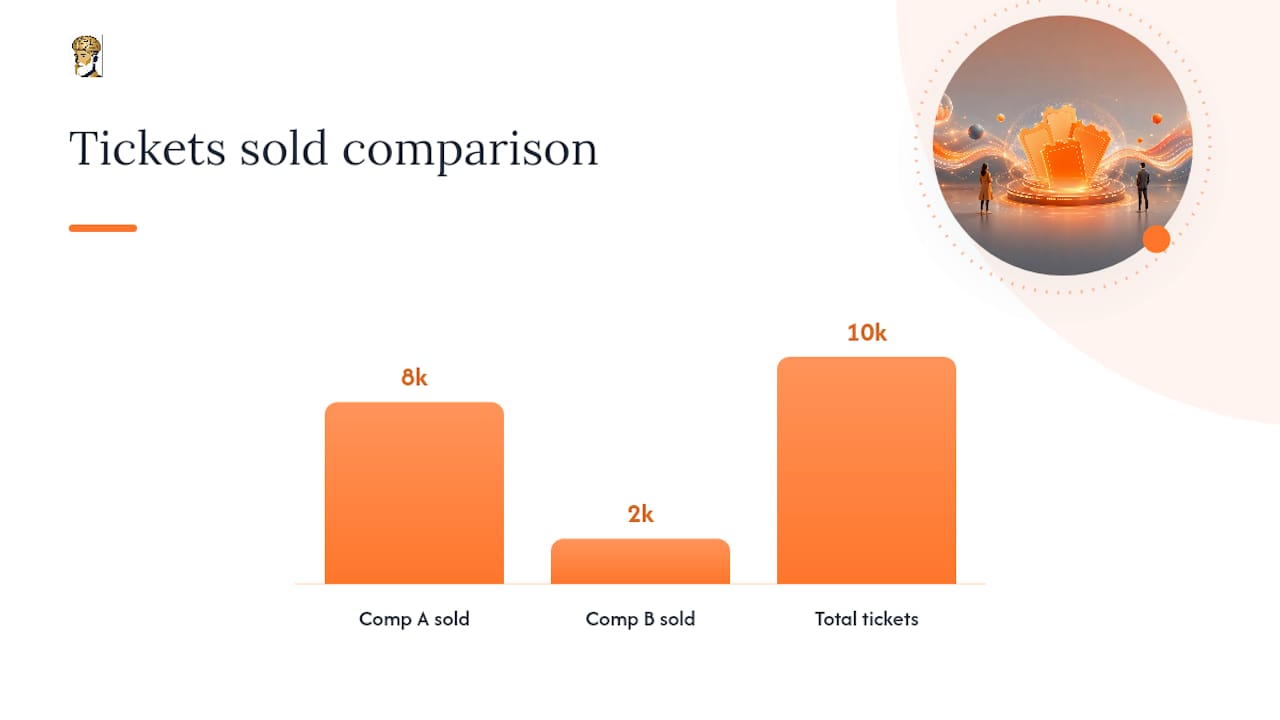
Comparing two competitions doesn’t need complicated spreadsheets. The core formula is straightforward: implied odds equal tickets sold divided by total tickets available for that draw. A simpler mental shortcut works almost as well: total tickets divided by one gives you the “one in X” chance a single ticket buys.
From there, work out your expected cost per chance by dividing the ticket price by that implied probability. A £5 ticket in a draw with 1 in 2,000 odds costs considerably less per chance than a £5 ticket in a draw offering 1 in 10,000, even though the sticker price is identical.
Worked example: Competition A sells tickets at £5 each, with 8,000 of 10,000 tickets sold (odds roughly 1 in 10,000 for the full draw, tightening as more sell). Competition B sells tickets at £5 each, with only 2,000 of 10,000 sold. Buying into Competition B now means your ticket competes against fewer rivals for the remaining allocation, making it the better-value entry purely on odds, assuming the prize values are comparable.
A few extra factors change the picture:
- For cars, watches, or holidays, always check whether a cash alternative exists and how it compares to the item’s realistic resale value, not its inflated headline price.
- For homes and cars specifically, factor in running costs, insurance, and any tax position before assuming the “prize value” quoted is money in your pocket.
- Ticket caps per person matter too: a low cap on a heavily undersold draw can limit how much value you’re actually able to capture.
Legal and safety basics: what UK regulation and safer-play guidance require
UK prize competitions sit under specific rules, and understanding them takes the guesswork out of deciding what’s above board. The Gambling Commission’s guidance on when a lottery is not a lottery explains that a genuine prize competition must include an element of skill or judgement, or offer a free-entry route that gives entrants an equal chance without paying.
That free-entry principle matters in practice, not just on paper: postal or online free entries should not be disadvantaged against paid ones in the actual draw mechanics. Reputable operators publish verification of past draws, showing winners and often video evidence of the draw process, which is one of the clearest trust signals available to check before entering.
Safer-play habits are worth building into your routine regardless of how confident you feel about a draw:
- Set a personal monthly spend cap before browsing competitions, not after.
- Use account-level spending limits or deposit controls where operators offer them.
- If entering competitions ever starts to feel compulsive rather than enjoyable, BeGambleAware offers free, confidential support and practical tools.
A quick action checklist: how to pick the best high-value competitions today
Running through five steps before you commit money takes a few minutes and consistently protects value.
- Confirm exactly what the prize is and whether a cash alternative exists, since this changes the real value on offer.
- Calculate implied odds from tickets sold against total tickets, not from the headline “chance to win” language.
- Confirm the free-entry route is genuinely available and check the operator’s verification or past-results page.
- Set a personal spend cap first, then decide how many tickets that budget allows.
- Save your entry confirmation and either watch the live draw or check the published results afterwards.
Treat this as a habit rather than a one-off exercise. Players who repeat this checklist across multiple draws each month tend to spend the same money on noticeably better odds than those who enter on impulse.
Prize types typically offered: cars, cash, homes, watches and holidays
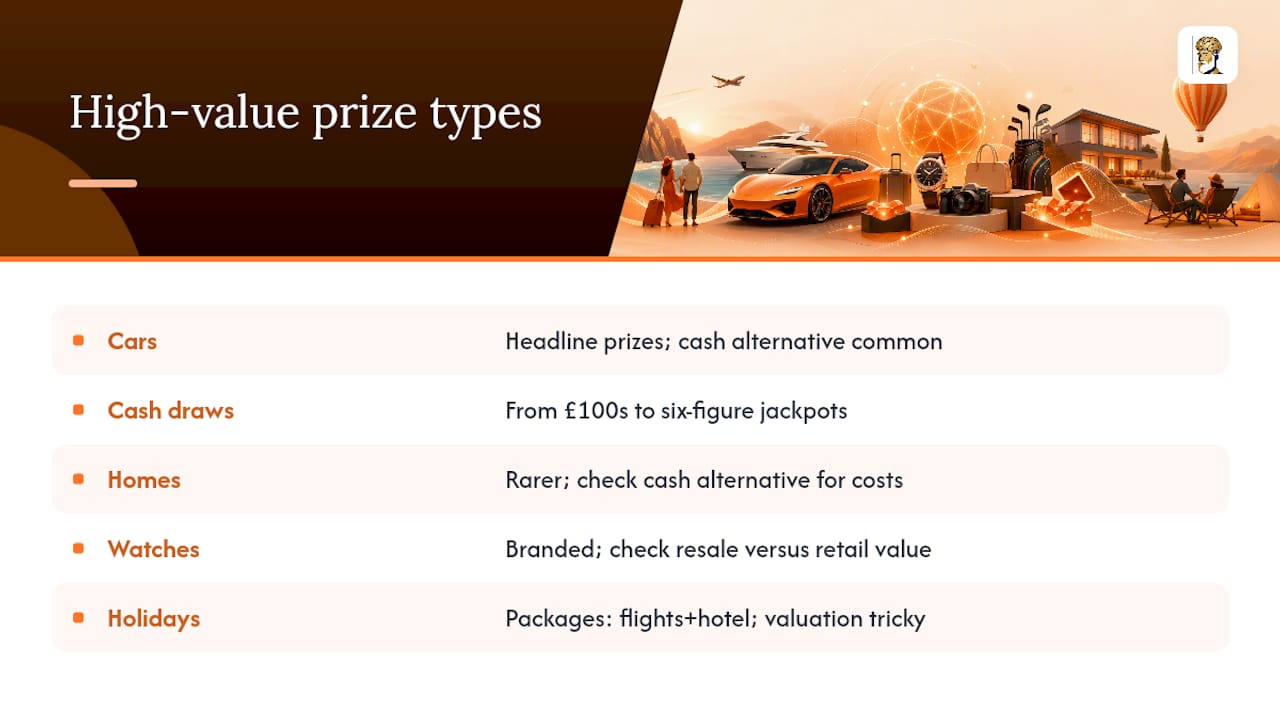
Cars remain the headline prize category for UK competition operators, spanning everything from hot hatches to performance and luxury models, almost always with a stated cash alternative for winners who’d rather take the money. Cash-only draws are their own separate category, ranging from a few hundred pounds up to six-figure jackpots, and tend to carry simpler terms since there’s no delivery logistics or valuation dispute to navigate.
Property competitions generate the most attention precisely because they’re rarer and the numbers involved are larger. When a home is offered as a prize, checking the cash alternative clause becomes essential, since stamp duty, legal fees, and ongoing running costs can make the cash option genuinely more practical for many winners.
Watches and luxury goods sit in a smaller but consistent category, often from recognisable brands, and their resale value versus retail price is worth researching before you weigh up whether the odds justify the ticket cost. Holiday prizes, meanwhile, are usually bundled as an experience package (flights, accommodation, sometimes spending money) rather than a simple cash figure, which makes them harder to value precisely but often appealing if you’d book something similar anyway.
Beyond these five, high-profile skill-based competitions also offer significant prize pools. The Amateur Photographer of the Year competition, for instance, runs with a prize pool of around £24,000 across cash and industry prizes, while events like the Leeds International Piano Competition publish a substantial first prize alongside detailed round-by-round timelines. These sit outside the ticket-based raffle model but illustrate how varied “high-value” competitions can be across the UK market.
Risks and common scams associated with high-value competitions in the UK
The biggest risk isn’t losing on a legitimate draw. It’s entering something that was never a genuine competition at all. Fake operators typically mimic real branding closely, list improbably generous odds, and disappear once enough entries have been collected.
A missing or unclear free-entry route is one of the clearest warning signs, since UK guidance on prize competitions expects one to exist in most cases. If a site makes free entry deliberately difficult to find or use, that’s rarely an accident.
Watch for these patterns specifically:
Phishing attempts dressed up as “you’ve won” notifications are common, particularly ones that ask for banking details or a small “processing fee” before releasing a prize. No legitimate UK operator asks winners to pay to receive a prize. Equally, be wary of draws with no published results archive or verification video; if you can’t find evidence that previous draws actually happened and produced a real winner, treat the current one with caution.
Social media impersonation accounts are another growing problem, copying a genuine operator’s branding to run fake giveaways in the comments of popular posts. Always navigate to an operator’s verified site directly rather than clicking links from unfamiliar accounts. An article on how to verify UK raffle sites are legit covers the specific checks worth running before you hand over payment details anywhere unfamiliar.
Strategies to maximise your chances and choose the right competitions
Winning any single draw is still a matter of odds, not skill, but where you choose to spend your budget is entirely within your control. Prioritising undersold competitions over popular, heavily-subscribed ones is the single most reliable lever available to a UK player.
Spreading a fixed budget across several undersold draws rather than concentrating it on one heavily-marketed competition tends to produce better expected value overall, since implied odds worsen sharply as ticket sales climb toward the cap. Timing matters too: entering early in a draw’s life, before ticket sales pick up, often means the odds shown at that point are more favourable than they’ll be closer to the closing date.
It’s also worth tracking a small set of trusted operators rather than chasing every new competition that appears. A comparison of UK prize competition operators shows how differently odds and terms are presented across the market, and familiarity with a handful of reputable sites makes it far easier to spot when something looks unusual.
Finally, resist the pull of prize size alone. A £100,000 cash draw with 200,000 tickets sold offers worse odds than a £5,000 draw with only 3,000 tickets in circulation, even though the headline figure looks less exciting.
What actually matters when choosing a competition to enter
Most guidance on this topic focuses heavily on prize size, and that’s where I think it gets the emphasis wrong. Prize size is the least useful number on the page. Implied odds, drawn from tickets sold against tickets available, tell you far more about whether an entry is worth your money than any headline figure ever will.
The conventional advice to “enter little and often” also deserves more scrutiny than it usually gets. Spreading a small budget across dozens of draws feels like a sensible hedge, but it often means missing the handful of genuinely undersold competitions that offer meaningfully better odds, simply because tracking that many draws manually isn’t realistic for most people.
What should come first, in my view, is verification. Confirm the free-entry route exists, confirm the operator publishes past results, and only then start comparing odds. A competition can look brilliant on paper and still be worth walking away from if it fails that basic check. Speed matters here too. Undersold draws don’t stay undersold once word spreads, which is exactly the gap a live-odds tracker is built to close.
— matt
How Raffle Genius helps you spot undersold high-value competitions
Manually checking odds across dozens of operators eats time you’d rather spend actually choosing where to play. Raffle Genius refreshes live odds every ten minutes across the operators it tracks, which means the percentage-sold figures you’re comparing are current, not stale numbers copied from a listing page updated hours earlier.

The undersold competitions feed exists specifically to surface draws where tickets sold sit well below the total available, giving you a shortlist of the week’s strongest odds without checking each operator individually. If you’re working to a deadline, the ending today page catches draws closing within 24 hours, useful for catching last-minute price drops or final undersold slots before a draw locks. Budget-conscious players can also look at the Play to Earn feature for earning tickets through gameplay rather than spending outright.
Start by browsing the operators tracked, set a personal watchlist, and let the odds update do the comparison work you’d otherwise be doing by hand.
Primary sources and regulator pages readers should bookmark
For rules on free-entry routes and lawful prize competitions, the Gambling Commission’s guidance on free draws and prize competitions is the primary reference. For safer-play tools and support, BeGambleAware remains the go-to resource. For live odds and undersold draws, bookmark Raffle Genius’s operator listings and its undersold competitions page.
Sources
FAQ
What are the best competitions to win money in the UK?
The best ones combine favourable implied odds, a genuine free-entry route, and a track record of published draw verification, rather than simply the largest advertised prize.
Which competition has the best odds?
Odds vary constantly as tickets sell, which is why checking a live tracker like Raffle Genius’s undersold competitions feed at the point of entry matters more than relying on a fixed ranking.
What are some reputable and genuine competition sites in the UK?
Reputable sites publish clear terms, a working free-entry route, and past-draw verification. Raffle Genius maintains a list of trusted operators it tracks for exactly these signals.
What are some online competitions I can participate in to win money in 2026?
Cash-prize raffles, car competitions with cash alternatives, and skill-based contests such as photography or music competitions all run throughout the year; checking current tickets sold against total tickets available is the best way to judge which ones offer real value right now.
Recommended
18+ · Please gamble responsibly. Raffle Genius is a comparison service and does not run competitions.
Best odds, straight to your inbox
One email a week with the undersold UK competitions closing soon. No spam, unsubscribe any time. 18+