
10 September 2026

Vet UK Mobile Cash Prize Games and Find Better Odds in 10 Minutes
Yes, mobile games that award raffle tickets for UK prize draws are real, but only a minority run them transparently. Legitimate operators offer a genuine free-entry route or a real skill test, as the Gambling Commission requires; many others bury the free option or dodge the question entirely. Before you play, check the terms and consider cross-referencing the prize against a live-odds tracker.
TL;DR:
- Most mobile games with cash prizes do not transparently offer genuine free-entry options, often hiding or complicating the free route to participate.
- The odds of winning are heavily influenced by the size of the ticket pool and your spend, with increased spending rarely improving expected value once operator margins are considered.
- UK law distinguishes between free prize draws, skill-based competitions, and lotteries, requiring explicit compliance and licensing for the latter two.
- Checking terms, prize specifics, winners’ history, and clear free-entry methods before playing can prevent wasting time or money on untrustworthy apps.
- Real-time odds tracking helps identify better opportunities, as ticket pools fluctuate and peak chances often align with better current odds rather than prize size alone.
Table of Contents
- How mobile games with cash prizes in the UK actually work
- UK legal checklist: free draws, prize competitions and lotteries
- How to vet a mobile raffle game before you play
- What it costs to earn tickets, and how odds shift with spend
- Responsible play when chasing cash prizes through mobile games
- Popular types of UK mobile games offering cash prizes
- Realistic strategies for improving your odds
- Do you pay tax on cash prizes from mobile games in the UK
- Why transparency matters more than the prize headline
- Compare live odds before you spend a penny on tickets
- Sources
- FAQ
How mobile games with cash prizes in the UK actually work
The mechanic is simpler than the marketing suggests. You open an app, complete a task (a daily login, a mini-game level, a leaderboard climb), and the app credits you with something it calls a “ticket,” “point,” or “token.” That credit then maps, in theory, onto an entry into a linked prize draw run by the app itself or a third-party operator.
The mapping is where things get murky. Some apps convert your in-game score directly into draw entries on a fixed schedule. Others run a leaderboard where only the top players each week actually earn a real ticket, meaning most players who spend time in the app get nothing tangible. A smaller group tokenises the reward, issuing a digital asset you then have to trade, swap, or “burn” through a marketplace before it becomes a usable entry.
Three revenue models sit underneath nearly all of these games:
- Paid ticket packs: buying extra entries directly, often with tiered pricing that rewards bigger spend.
- Advertising: watching video ads between game rounds in exchange for bonus tickets.
- In-app purchases: cosmetic upgrades, energy refills, or speed boosts that don’t affect odds but keep you playing longer.
Web3 and NFT branding shows up increasingly often in this category, promising blockchain-verified fairness. In practice, it usually adds wallet setup, gas fees, and token-price volatility without improving your actual odds of winning. A ticket is a ticket whether it’s stored on a spreadsheet or a blockchain; the draw mechanics behind it matter far more than the technology wrapper.
UK legal checklist: free draws, prize competitions and lotteries
UK law draws a firm line between three categories of prize game, and knowing which one you’re playing determines what protections you actually have.
- Free prize draws: entry must be genuinely free, with no requirement to pay or make a purchase to enter on equal terms with paying players. The Gambling Commission’s guidance on free draws and prize competitions is explicit that a free route must exist and be usable.
- Prize competitions: these require a genuine test of skill, judgement, or knowledge before entry. A simple multiple-choice question that most players could guess (“What colour is the sky?”) does not meet the bar the Commission expects.
- Lotteries: any paid-entry game determined purely by chance, with no free route and no skill element, is a lottery. Running one without a licence is illegal in the UK.
Northern Ireland applies tighter restrictions on paid-entry games than England, Scotland, and Wales, so an app compliant in London isn’t automatically compliant for a player in Belfast.
Before entering, run through this quick checklist:
- Is the free-entry route visible on the same page as the paid option, not hidden three clicks deep?
- Does the “skill question” require actual thought, or is it a formality?
- Are the terms and conditions dated, specific, and easy to find?
- Does the operator publish how and when the draw takes place?
Merchant Advice’s breakdown of UK raffle licensing confirms that paid-only, pure-chance online draws count as remote lotteries requiring a licence, which most casual gaming apps simply don’t hold.
How to vet a mobile raffle game before you play
A five-minute check on any new app can save you hours of wasted play. Start with the terms and conditions page, not the app store description, since that’s where the real rules live.
- Confirm the free-entry method is stated in plain language, not buried in a linked PDF.
- Check that free and paid entrants go into the same draw with the same odds.
- Look for a specific prize description (make, model, cash value), not a vague “prizes worth up to £X.”
- Search for a published winners’ list or draw archive from previous rounds.
- Check for a working contact address and a complaints procedure.
The Fundraising Regulator’s guidance on lotteries and prize competitions treats transparency as the clearest marker of a legitimate operator: organisers should show their working, not just their prizes. A separate Fundraising Regulator resource on avoiding chance-based confusion notes that published draw dates and winner proof are standard practice among reputable organisers, and their absence is a practical warning sign.
Red flags worth walking away from: no visible free route, no fixed draw date, generic stock-photo “winners,” or a rush to get your card details before you’ve seen a single term.
Pro Tip: Screenshot the terms and conditions the day you enter. Apps have been known to edit their T&Cs retroactively once a draw closes.
What it costs to earn tickets, and how odds shift with spend
Free routes exist in most legitimate apps, but the realistic yield is modest. Expect something like:
- A small number of tickets per day from logins or short game sessions.
- Occasional bonus tickets for climbing a weekly leaderboard.
- Small referral bonuses, typically a few tickets per friend who joins.
Paid routes scale differently. Single tickets might cost pennies each, but bundles and “VIP” subscriptions push the effective price per ticket down while pushing your total spend up, because operators want volume, not bargain-hunters.
Here’s the maths that actually matters. If a draw has 10,000 tickets in the pool and you hold 10, your odds are 1 in 1,000. Buy a £20 bundle of 200 tickets, and your odds improve to roughly 1 in 50, sounds compelling until you check the prize value against that spend. If the prize is worth £500 and the total ticket pool generates £2,000 in entry fees, the operator’s math works regardless of how many tickets you personally hold. Spending more narrows your odds but rarely improves your expected value once the operator’s margin is factored in.
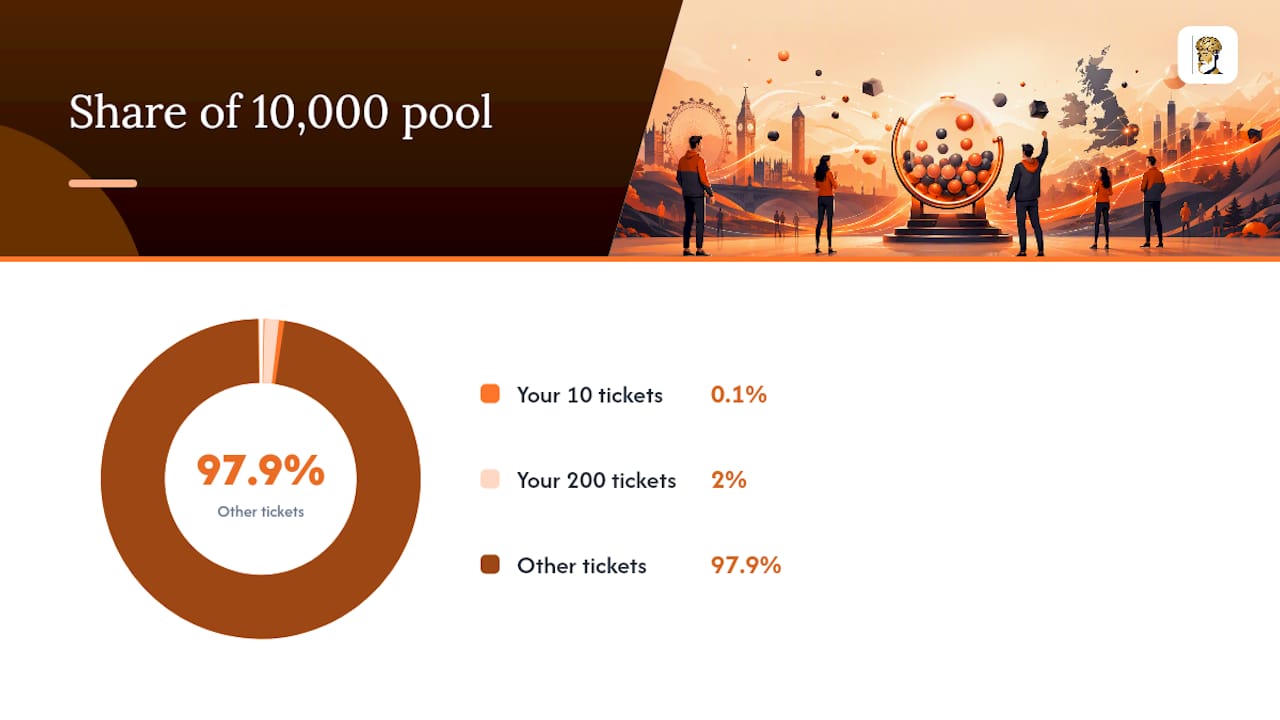
A live-odds tracker that refreshes every 10 minutes matters here because ticket pools grow and shrink constantly, and yesterday’s good odds can be today’s saturated draw.
Responsible play when chasing cash prizes through mobile games
Treat every paid ticket as entertainment spend, not investment, and set a fixed weekly cap before you open the app.
Watch for design patterns built to keep you playing past the point of enjoyment: countdown timers on bonus offers, streak mechanics that punish a missed day, and push notifications timed around payday. These aren’t accidents.
- Set a hard weekly limit on paid tickets and don’t top it up mid week.
- Use built-in pause or cool-off features if the app offers them.
- Step back if you notice you’re playing to chase a loss rather than for fun.
- Keep a note of total monthly spend across every app you use.
If a specific operator behaves badly, ignoring win requests or hiding results, you have several UK complaint routes. Start with the operator directly, then escalate to the Advertising Standards Authority for misleading promotions, or the Gambling Commission if you suspect an unlicensed lottery. For fundraising-linked draws, the Fundraising Regulator is the right body. If gaming starts to feel compulsive, GamCare offers free, confidential UK support.
Popular types of UK mobile games offering cash prizes
The category splits into a few recognisable formats rather than dozens of distinct products.
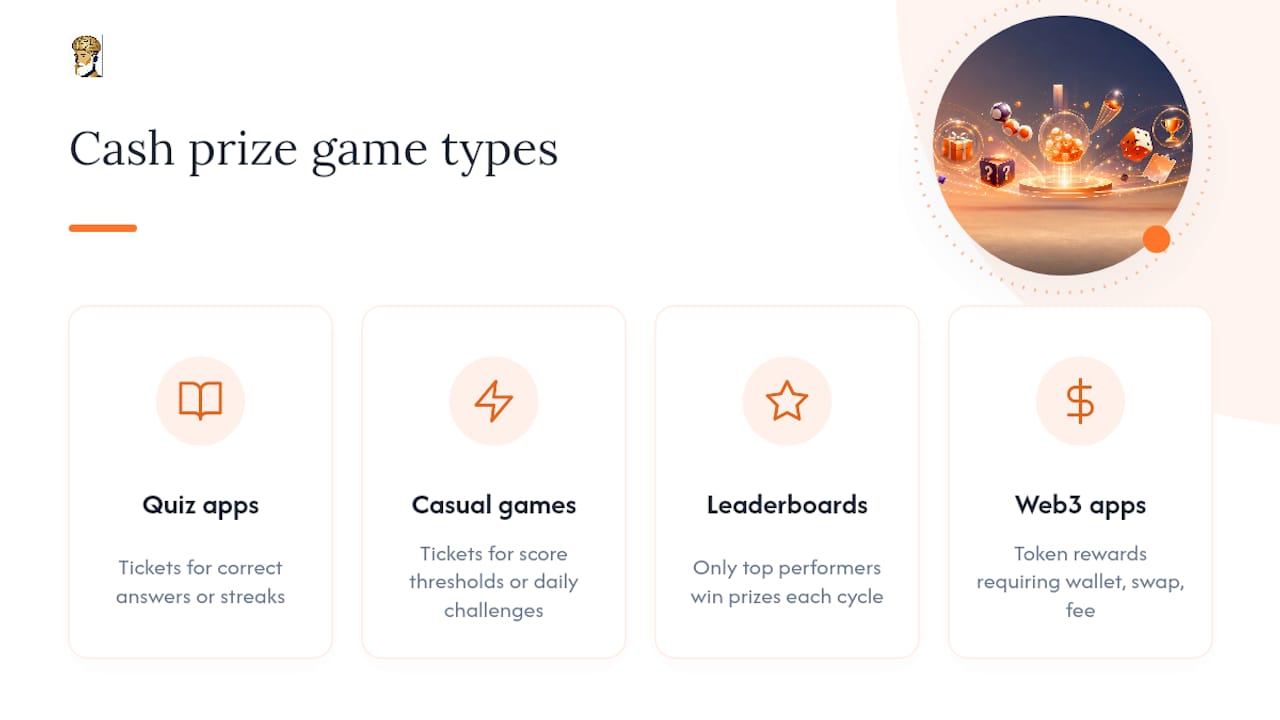
Quiz and trivia apps remain the most common structure, awarding tickets for correct answers or streaks. These lean closer to genuine prize competitions when the questions require real knowledge, though many stretch the definition with questions almost anyone could answer.
Casual arcade and puzzle games hand out tickets for hitting score thresholds or completing daily challenges. Match-three puzzles, runner games, and simple strategy titles dominate here, largely because they’re cheap to build and easy to monetise through ads between rounds.
Leaderboard-based competition apps reward only top performers each cycle, which means the bulk of players earn little beyond the occasional consolation ticket. These tend to favour players with more time to invest rather than more skill.
Web3-branded reward apps, like the token-based mechanics seen in listings such as Tanjea Race to Riches on Google Play, promote crypto rewards and marketplace trading. Converting these tokens into anything resembling a usable prize entry typically requires a wallet, a swap, and a fee, friction that plain ticket-based apps don’t impose. For readers curious about how token mechanics and variance interact, Solana Casino’s explainer on variance versus volatility covers the underlying concepts in more depth, and a crypto casino resource on wallet mechanics is useful background if you’re weighing whether a token-based app is worth the extra steps.
None of these formats guarantee better odds than a straightforward paid raffle ticket bought directly from an operator; the format changes the experience, not the underlying probability.
Realistic strategies for improving your odds
There’s no shortcut around basic probability, but a few habits genuinely improve your position.
Play the apps with the smallest total ticket pools relative to entries available, since a niche quiz app with 500 weekly entrants gives you far better odds than a viral one with 50,000. Prioritise free-entry routes over paid ones until you’ve confirmed the operator is transparent and consistently publishes winners, since spending money with an unproven operator is the highest-risk move you can make.
Spread modest effort across two or three vetted apps rather than concentrating everything on one, since ticket pools vary week to week and diversifying protects you against one draw suddenly attracting a surge of entrants. Track expiry dates carefully. Free tickets in many apps lapse after a set period, so unused entries from a slow week are often wasted rather than banked.
Finally, treat leaderboard-style apps differently from flat ticket-pool apps. If you’re not consistently placing in the top bracket, your realistic ticket yield from a leaderboard game may be close to zero, no matter how often you play. A flat-pool app where every ticket counts equally usually rewards casual, consistent play far more reliably than a competitive leaderboard structure ever will.
Do you pay tax on cash prizes from mobile games in the UK
Genuine prize winnings from a UK free draw, prize competition, or lottery are not treated as income by HMRC and are not subject to Income Tax or Capital Gains Tax at the point you receive them. This follows the same principle that applies to National Lottery wins and other UK raffle prizes: a windfall from a game of chance or skill competition isn’t earnings.
The position shifts once the prize itself starts generating money. If you win a cash lump sum and simply bank it, there’s nothing to declare. But if you win an asset, property, shares, cryptocurrency, that later produces income or increases in value before you sell it, that subsequent income or gain can fall within normal tax rules. Interest earned on a cash prize sitting in a savings account, for instance, is taxable in the ordinary way, just like interest on any other savings.
Cryptocurrency or token prizes deserve particular caution. If a mobile game pays out in tokens rather than cash, converting those tokens to pounds through a marketplace can itself be treated as a disposal for Capital Gains Tax purposes, depending on value movement between receipt and conversion. Factor in both the conversion fee and this potential tax exposure when judging whether a token-based prize is worth pursuing over a straightforward cash payout. If you’re ever unsure how a specific prize should be treated, HMRC’s own guidance or a qualified accountant is the right port of call rather than assuming the same rule applies to every prize type.
Why transparency matters more than the prize headline
Most coverage of this category focuses on the size of the prize on offer, a car, a stack of cash, the latest phone. That’s the wrong starting point. The prize headline tells you nothing about whether you’ll get a fair shot at it, and plenty of well-marketed apps with genuinely appealing prizes fail basic transparency tests the moment you read their terms.
The more useful question is always: how does this operator behave when nobody’s watching? Do they publish winners without being asked? Is their free-entry route as easy to find as their “Buy Now” button? Most don’t pass that test, not because they’re deliberately dishonest, but because transparency requires ongoing effort that a lot of operators simply don’t prioritise once the marketing budget is spent.
Rafflegenius’s approach reflects that priority. The platform refreshes odds every 10 minutes, which sounds like a technical detail until you consider how often ticket pools shift during a popular draw. A competition that looked oversubscribed at breakfast can look genuinely undersold by lunchtime once entries plateau, and manually refreshing dozens of operator pages to catch that shift isn’t realistic for most players.
The value isn’t in finding the biggest prize. It’s in finding the moment a draw’s odds are better than its marketing suggests, and that only happens through consistent, current tracking rather than a one-off comparison.
— matt
Compare live odds before you spend a penny on tickets
Some platforms offer a single, constantly updated view of odds across UK draws, so you’re not relying on one operator’s own marketing to judge whether a ticket is worth buying.
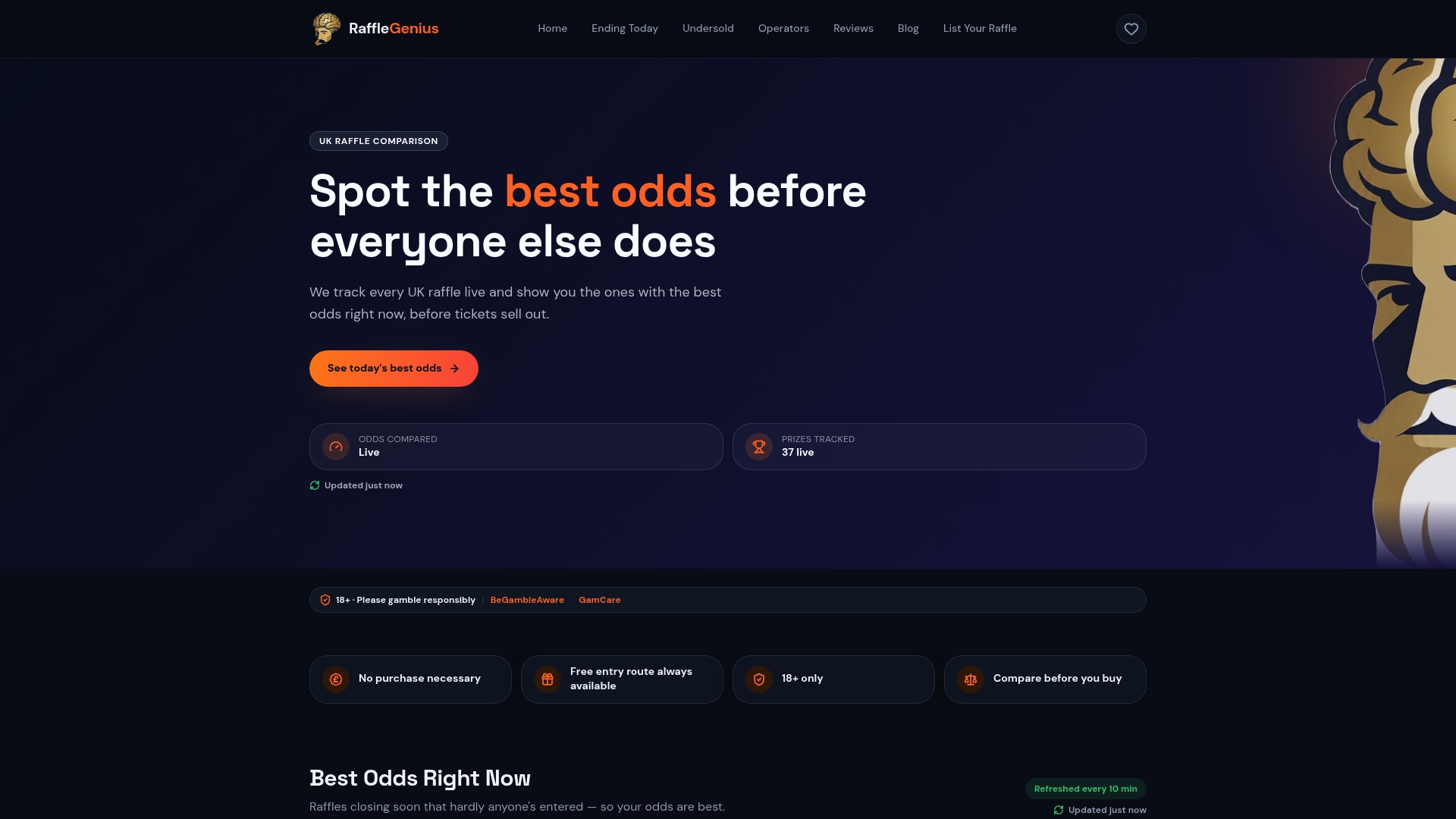
The Play to Earn feature lets you build up tickets through gameplay and see exactly how those tickets stack up against paid entries elsewhere, without needing a crypto wallet or a token conversion step. Getting started takes three moves: create a free account, browse the live odds board to see which draws currently offer the best value, and set an alert so you’re notified the moment a tracked competition’s odds shift in your favour. It’s a faster way to spot an undersold competition than checking operator by operator, and it costs nothing to start comparing today.
Sources
- Lotteries and raffles | Fundraising Regulator
- Do you need a licence to run a raffle in the UK? | Merchant Advice
FAQ
Are mobile games with cash prizes legal in the UK?
They’re legal when structured as a genuine free prize draw or a prize competition requiring real skill; a paid-only, pure-chance draw without a free route counts as an unlicensed lottery, which isn’t legal.
Do I have to pay tax on raffle winnings from a mobile app?
No, genuine prize winnings from UK free draws, prize competitions, or lotteries aren’t subject to Income Tax or Capital Gains Tax, though income later generated by the prize itself can be taxable.
How can I tell if a raffle app is trustworthy?
Check that the free-entry route is clearly promoted alongside paid options, that terms are specific and dated, and that the operator publishes past winners and draw dates.
Does buying more tickets guarantee better value?
No, buying more tickets narrows your personal odds but rarely improves expected value once the operator’s margin on the ticket pool is factored in.
How does Rafflegenius help me choose between raffle apps?
Rafflegenius tracks live odds across UK operators, refreshing every 10 minutes, so you can compare ticket value and spot undersold competitions rather than checking each app manually.
Recommended
18+ · Please gamble responsibly. Raffle Genius is a comparison service and does not run competitions.
Best odds, straight to your inbox
One email a week with the undersold UK competitions closing soon. No spam, unsubscribe any time. 18+