
24 August 2026
Compare live raffles →
Gift card raffle odds UK: how to calculate your real chances
Your odds of winning any gift card raffle equal your ticket count divided by total tickets sold, converted into a percentage or “1 in X” figure. Small entry pools boost your chances significantly, but the maths only matters once you’ve cleared the legal check: does the operator offer a genuine free-entry route, or do they hold a Gambling Commission licence?
TL;DR:
- The probability of winning increases significantly with smaller ticket pools, especially in local raffles with around 200 tickets, compared to national lotteries.
- Operators often report odds based on either maximum possible tickets or current sales, which can substantially affect the advertised chances for entrants.
- Valid free-entry options must be equally prominent and explicitly disclosed, or the raffle may be classified as gambling under UK law.
- Most raffle expected values are negative, meaning you are likely to lose money on average unless the prize is personally valuable or the pool is very small.
- Verifying operator transparency involves checking for license or charity registration, clear win and draw details, and genuine free entry routes before participating.
Table of Contents
- How gift card raffle odds UK players can actually calculate
- What published odds look like in UK raffles
- UK law and guidance that govern prize draws, free entry and licences
- A step-by-step checklist to verify a UK raffle operator
- How much your ticket is really worth: expected value and sensible limits
- Sources, author notes and how Raffle Genius verified operator odds
- Why I treat every raffle ticket as entertainment spending
- How Raffle Genius helps you find better odds
- Sources
How gift card raffle odds UK players can actually calculate
Every raffle boils down to one fraction: your tickets divided by total tickets sold. Buy multiple tickets in a draw and your odds equal the number of tickets you buy divided by the total entries, expressed as a percentage or “1 in X” figure. That’s the whole foundation. Everything else is just variations on this formula.
Converting between formats matters because operators aren’t consistent about how they present odds.
Here’s where it gets more useful. If you’re buying multiple tickets, you don’t just multiply your single-ticket probability by the number of tickets. You need the complement rule: the chance you win at least once equals 1 minus the chance you win zero times.
- Calculate your chance of losing on a single ticket (1 minus your win probability).
- Raise that loss probability to the power of the number of tickets you’re buying.
- Subtract the result from 1 to get your chance of winning at least once.
Say a raffle has 1,000 tickets and you buy 10. Your loss probability per ticket is 999/1,000, or 0.999. The gap widens as ticket counts grow.
Multiple prizes without replacement (say, three separate gift cards drawn from the same pool, no ticket winning twice) use a slightly adjusted version of this formula, reducing the total pool by one after each draw. For most gift card raffles advertising a handful of prizes, this only shifts your odds marginally, so a simplified single calculation is usually close enough for practical decisions.
Then there’s expected value, arguably the most useful number nobody calculates. Expected value equals prize value multiplied by win probability, minus your ticket cost. If you’re buying a £2 ticket for a 1-in-1,000 chance at a £200 gift card, your expected value is (£200 × 0.001) minus £2, which comes to negative £1.80. You’re not “wrong” to enter, but you should know you’re paying roughly £1.80 on average for the experience, not the prize.

What published odds look like in UK raffles
Real UK operators give you useful benchmarks, and the range is wider than most people expect.
- The British Heart Foundation publishes estimated odds for its regular lotteries, quoting roughly 1 in 498 for its Weekly Lottery and 1 in 453 for its Superdraw, based on typical entry levels. Both convert to a chance of around 0.2%.
- The League publishes similar headline odds for its raffle, a common pattern among UK charity draws that report figures from recent ticket sales data.
- Small local raffles, such as a village hall gift card draw with 200 tickets in circulation, can offer odds as strong as 1 in 200 for a single entry, dramatically better than a national charity lottery.
- Commercial prize competitions selling gift cards or tech prizes often sit somewhere between these extremes, with entry pools ranging from a few hundred to tens of thousands depending on prize value and marketing reach.
The tricky part is that published odds depend heavily on how an operator counts its denominator. Some report odds based on the maximum tickets available for sale, whether or not they all sold. Others calculate live odds from tickets actually purchased at the moment of the draw, which shifts favourably for entrants if the competition doesn’t sell out. Pre-assigned entries, where an operator allocates a set number of guaranteed slots to certain routes, can also distort a headline figure if it isn’t disclosed clearly. Always check whether an operator states its odds are based on maximum capacity or current sales, because the difference can be substantial.
UK law and guidance that govern prize draws, free entry and licences
The legal line in the UK hinges on one factor: does the entrant have to pay to enter, and is there a genuinely free alternative?
A prize draw that offers a free-entry route (commonly called AMOE, or “alternative method of entry”) sits outside gambling law and doesn’t need a Gambling Commission licence. A lottery, where entry requires payment and there’s no equivalent free route, is gambling, and the operator must either register with a local authority for a small society lottery or hold a full Gambling Commission licence depending on scale and structure.
The Voluntary Code of Good Practice for Prize Draw Operators sets out what “genuinely free” actually means. It isn’t enough to bury a postal entry option in the small print. The code requires the free route to be clearly publicised, equally convenient to use, and given sufficient time for entrants to submit before the draw closes.
Key figure: the Gambling Commission notes that online lotteries run through social media, fundraising platforms, and live streaming are a growing category that typically requires registration or a licence, precisely because these formats often blur the line between a free prize draw and paid gambling.
Things you should check as an entrant:
- Whether the free-entry method is advertised at the same prominence as the paid route, not tucked away in terms and conditions.
- Whether the operator states a Gambling Commission licence number, or, for smaller society lotteries, a local authority registration.
- Whether draw dates, prize values, and entry numbers are published clearly and updated regularly.
An operator that skips any of this isn’t necessarily running a scam, but it is failing basic transparency standards that legitimate operators meet as a matter of course. That gap is the first thing worth noticing.
A step-by-step checklist to verify a UK raffle operator
Before you hand over card details for any gift card raffle, run through this checklist. It takes about two minutes and it’s worth every second.
- Look for the free-entry route. It should be as easy to find and use as the paid option, not hidden three clicks deep or requiring a postal entry with no stated deadline.
- Search for registration details. A legitimate operator either states a Gambling Commission licence number or, for charity raffles, a registered charity number you can verify independently.
- Check for published entry numbers or live odds. Reputable operators disclose how many tickets exist and update that figure as sales progress.
- Confirm the draw date and winner verification process. Look for evidence of past winners, ideally with some form of public announcement or audit trail.
- Read the terms and conditions properly. Vague prize descriptions, unclear cash-alternative values, or contradictory rules are all warning signs.
Watch for red flags: an AMOE that’s technically present but practically unusable, prize values that seem inflated or unclear, winners who can’t be verified anywhere, high-pressure countdown timers pushing you to buy “before it’s too late,” or an operator with no visible contact details or company registration.
Pro Tip: If you can’t find the operator’s Gambling Commission details or charity number within thirty seconds of landing on their entry page, treat that as your answer. Legitimate operators don’t make you hunt for it.

If something looks off, you can raise it with the Gambling Commission directly, or contact the Fundraising Regulator if the operator claims charitable status. For anyone finding it hard to stop entering repeatedly despite mounting losses, BeGambleAware offers free, confidential support.
How much your ticket is really worth: expected value and sensible limits
Most raffles carry a negative expected value, meaning that on average, across many entries, you’ll lose more than you win. That’s not a design flaw. It’s how prize draws fund themselves, whether for a charity or a commercial operator, and it’s worth accepting upfront rather than being surprised by it later.
Take a low-cost ticket for a high-value gift card with thousands of tickets sold. Your win probability is very low, so expected value will typically be negative, meaning you likely lose money on average. You’re statistically likely to lose most of your stake, though the appeal, fairly, is the shot at the full prize rather than the average outcome.
- Buying extra tickets makes clearer sense when the total pool is small, since each additional ticket moves your odds meaningfully rather than negligibly.
- It also makes sense when the prize holds personal value beyond its cash figure, a specific gift card for a shop you use constantly, say.
- It rarely makes sense to chase losses by buying more tickets in a draw you’ve already entered and lost, since your odds don’t improve retroactively.
- Setting a fixed monthly cap and treating entries purely as entertainment spending keeps the maths from becoming a problem.
A raffle becomes a genuinely reasonable spend when the pool is tiny, the ticket price is low, or the prize carries value to you that a spreadsheet can’t capture.
Sources, author notes and how Raffle Genius verified operator odds
This article draws on the Voluntary Code of Good Practice for Prize Draw Operators, Gambling Commission guidance, and published odds from named charity operators including the British Heart Foundation and The League. Odds figures were cross-checked against each operator’s own public disclosures rather than third-party estimates, though published entry numbers can shift between the time of writing and the time you enter. Raffle Genius tracks live odds across UK operators, updating figures at short intervals, and maintains a blog covering operator transparency and strategy in more depth.
Why I treat every raffle ticket as entertainment spending
I’d rather readers walk away from a raffle knowing exactly what they bought, a small, calculated shot at a prize, not a savings plan with better branding. That distinction shapes everything Raffle Genius does: surfacing genuinely better odds and flagging operators who play fast and loose with transparency. Run through the legal checks and the checklist above before you enter anything, and you’ll rarely go far wrong.
— matt
How Raffle Genius helps you find better odds
Once you know how the maths and the legal checks work, the practical problem becomes finding raffles where the numbers actually favour you. Raffle Genius updates live odds across UK operators roughly every ten minutes, so you’re comparing current figures rather than stale ones from a listing page that hasn’t refreshed in weeks.

The platform’s Undersold Competitions page flags raffles where ticket sales are lagging, meaning your personal odds are currently stronger than the operator’s advertised worst case. If you’d rather build entries without spending directly, the Play to Win feature lets you earn tickets through free gameplay instead. Both sit alongside a running list of operators Raffle Genius tracks, each checked against the transparency standards covered above. Have a look at the current undersold list and see which draws are worth your attention this week.
Sources
GOV.UK’s Voluntary Code and Gambling Commission fundraising guidance cover the legal framework in full.
This article is general information, not a substitute for advice from a qualified lawyer. Consult a qualified legal professional about your own circumstances before acting on anything here.
- Voluntary Code of Good Practice for Prize Draw Operators
- The British Heart Foundation Raffle
- Raffle Odds Calculator: Calculate Your Chances of Winning Any Prize Draw (2026) - Practical Web Tools
Recommended
- Are UK raffle sites legit? What to check before you enter | Raffle Genius
- UK Raffle Blog — Best Odds, Guides & Industry News | Raffle Genius
- How to Find the Best UK Prize Raffles: A Complete Operator Comparison Guide | Raffle Genius
- UK prize competition operators compared: BOTB, Raffall, Premier Prize, Seven Days Performance and Raffle House | Raffle Genius
18+ · Please gamble responsibly. Raffle Genius is a comparison service and does not run competitions.
Live raffles worth a look
Fewest tickets sold right now — your best odds.
 Premier Prize Competitions
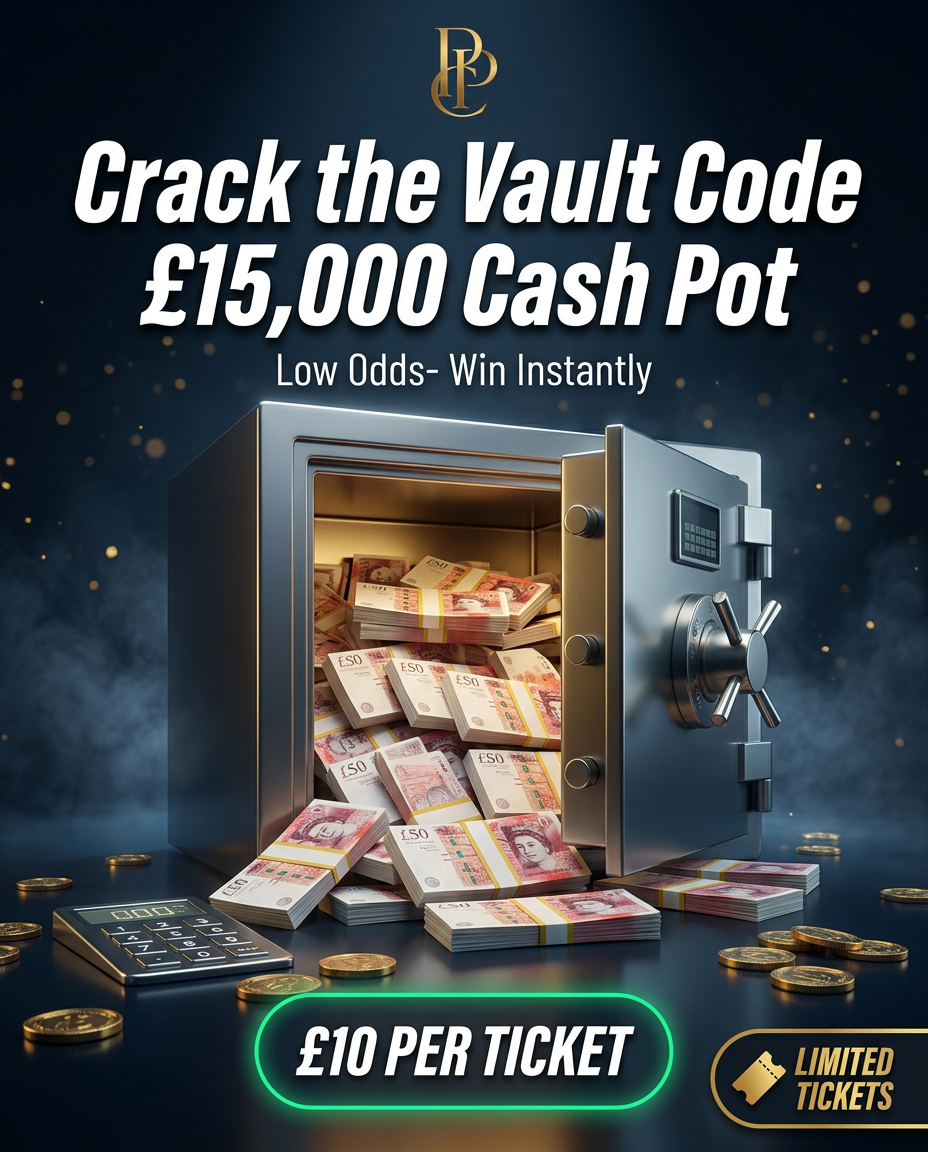
Low Odds Crack the Code £15,000 Cash Pot
Best oddsvia Premier Prize Competitions
Live odds for £25.00
1 in 1.0
1 in 1,373 if it sells out
0%sold
2,745 left
£10.00 per ticket
Closes in
17d 05h 54m 48s
 Premier Prize Competitions
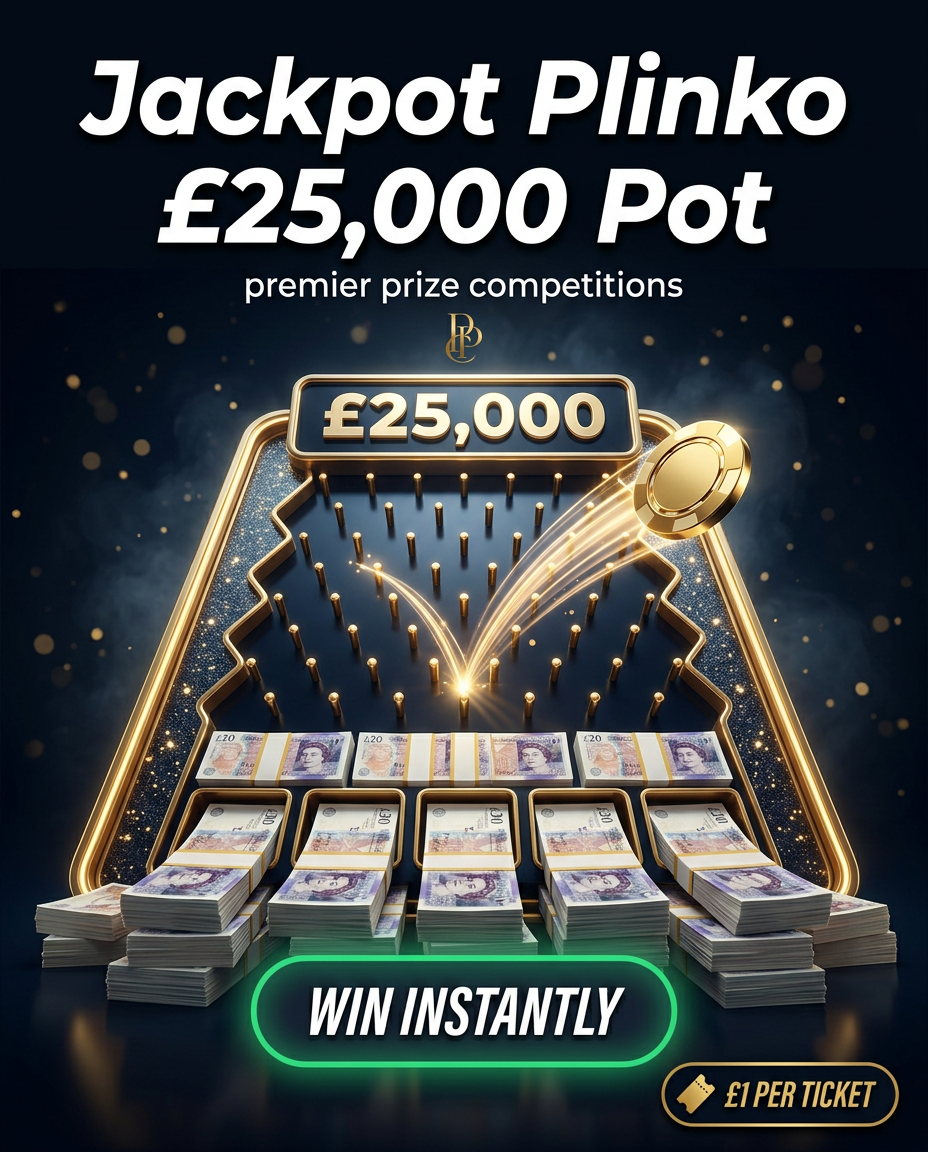
PLINKO £25,000 Jackpot Hunt
Best oddsvia Premier Prize Competitions
Live odds for £25.00
1 in 1.0
1 in 1,596 if it sells out
0%sold
39,906 left
£1.00 per ticket
Closes in
52d 06h 54m 48s
 Elite Competitions
The Pokémon Collectors Dream Bundle + £10,000 Cash
Best oddsvia Elite Competitions
Live odds for £25.00
1 in 61
1 in 6,002 if it sells out
1%sold
4,949,999 left
3p per ticket
Closes in
7d 05h 54m 48s
Best odds, straight to your inbox
One email a week with the undersold UK competitions closing soon. No spam, unsubscribe any time. 18+
Stay signed up for a chance to win £50 every month. One random winner drawn from all subscribers.
No purchase necessary. Free entry.